
Coșul meu
Coșul tău este gol!
GHK-Cu (Copper Tripeptide-1)
Premium Bioactive Peptide for Skin Research, Tissue Repair and Healthy Aging Studies
Research Category: Skin Biology • Tissue Repair • Healthy Aging Research
Why Choose GHK-Cu from Nedermann Lab?
We believe that research materials should offer more than technical specifications. Every batch of GHK-Cu is accompanied by comprehensive documentation and undergoes documented quality control procedures to ensure analytical consistency and reliability.
Our goal is to provide research materials characterized by batch-to-batch consistency, full traceability, and technical documentation, enabling researchers, laboratories, and academic institutions to work with materials that meet the highest standards required for scientific research.
Nedermann Lab Quality Standards
At Nedermann Lab, quality is a documented process, not simply a specification.
Every batch of GHK-Cu is evaluated to ensure analytical consistency, product integrity, and complete traceability throughout the manufacturing process.
To achieve this, each production batch undergoes documented quality control procedures using validated analytical methods to verify product identity and confirm compliance with established technical specifications. This approach provides researchers with highly consistent and reproducible research materials suitable for demanding laboratory applications.
Product Highlights
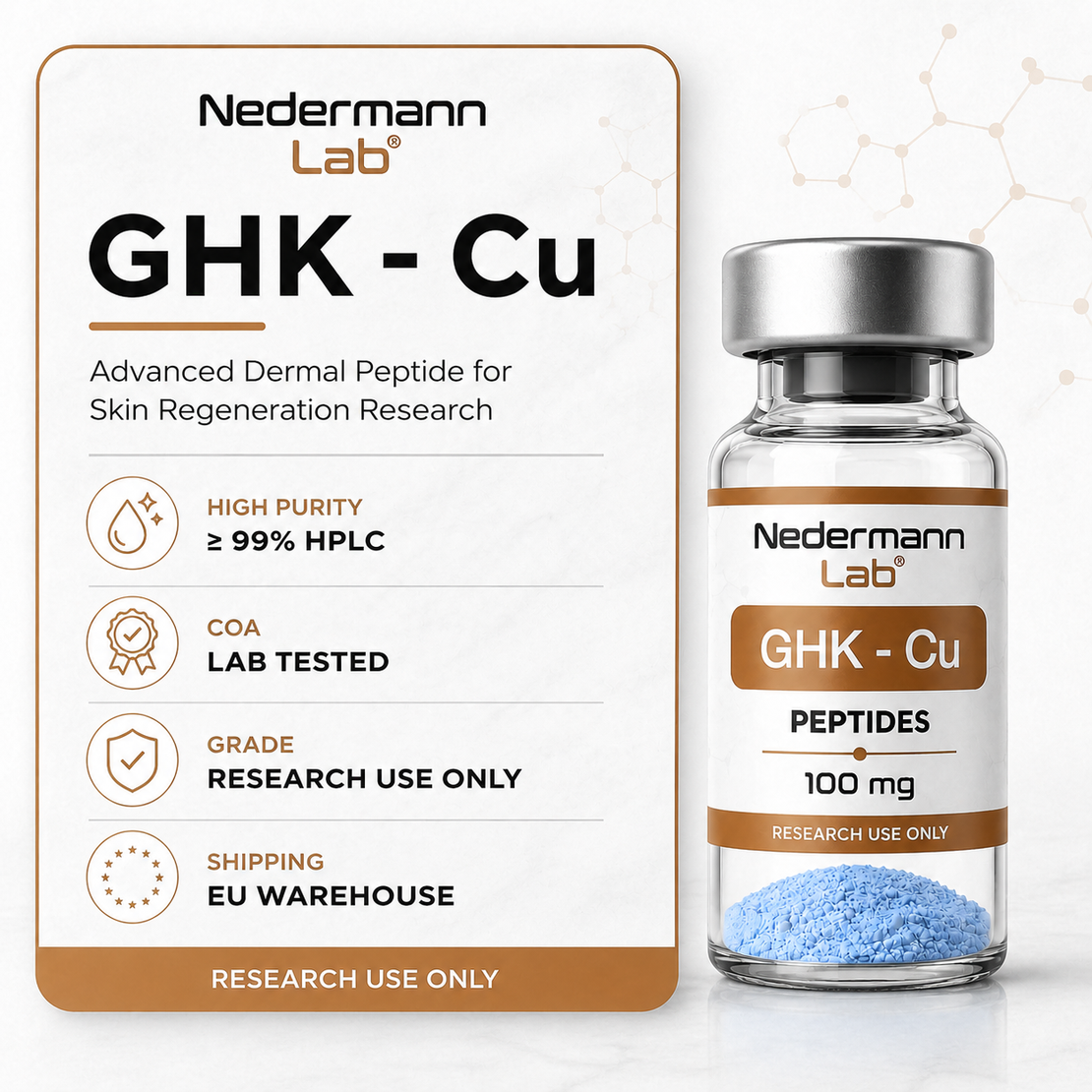
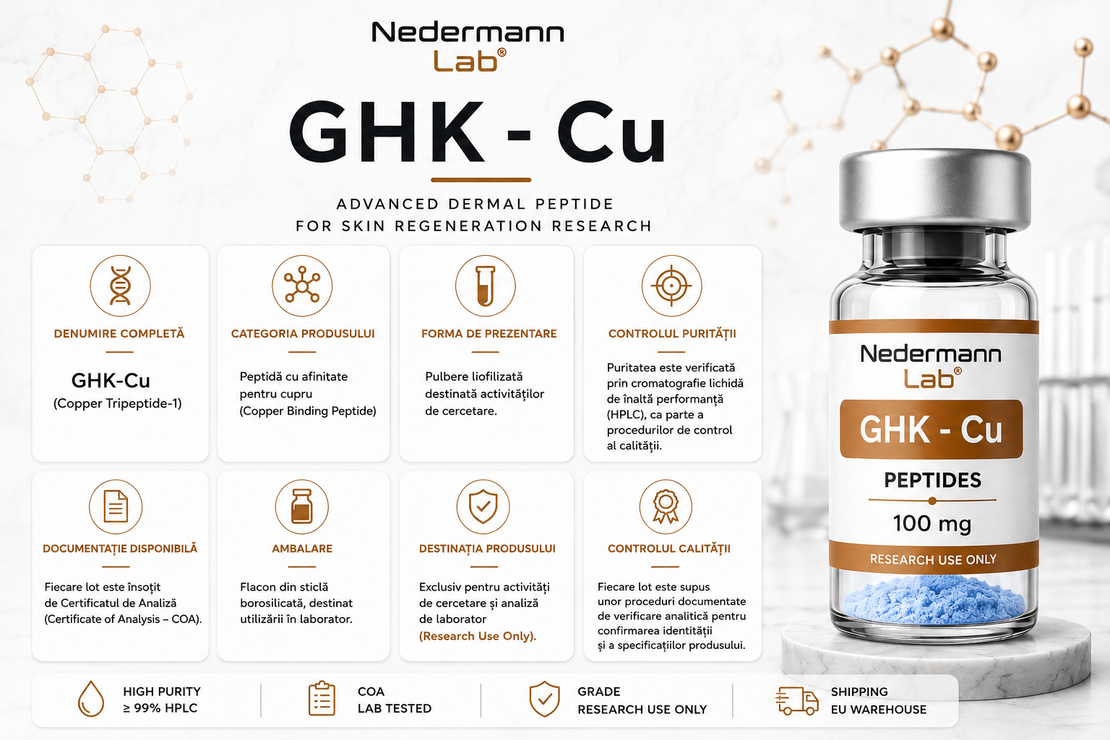
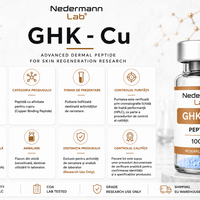
✔ ≥99% analytical purity, verified by High Performance Liquid Chromatography (HPLC)
✔ Certificate of Analysis (COA) available for every production batch
✔ Lyophilized powder for enhanced laboratory stability and handling
✔ Rigorous quality control and complete batch traceability
✔ Professional packaging in laboratory-grade borosilicate glass vials
✔ Fast shipping from our European warehouse
✔ Intended exclusively for Research Use Only (RUO)
What Is GHK-Cu?
Within the field of regenerative biology, GHK-Cu has become one of the most extensively investigated bioactive peptides in modern scientific research. It is recognized in the scientific literature as a naturally occurring copper-binding tripeptide widely studied for its role in skin biology, tissue repair, extracellular matrix research, and healthy aging.
Unlike many research peptides, interest in GHK-Cu extends across multiple scientific disciplines. Scientific literature describes its use in studies involving collagen biology, skin regeneration, wound healing, connective tissue research, cellular communication, and the biological mechanisms associated with maintaining healthy tissue structure.
The GHK-Cu supplied by Nedermann Lab is manufactured and verified according to documented quality control procedures and is analytically characterized to confirm its identity and purity. This approach ensures a high level of batch-to-batch consistency while providing researchers with reliable material for laboratory studies and experimental applications.
From a structural perspective, GHK-Cu is a naturally occurring copper-binding tripeptide that functions as an important signaling molecule in biological systems. In the scientific literature, it is widely investigated as a model for studying skin biology, connective tissue organization, extracellular matrix remodeling, tissue repair, and healthy aging.
Key Areas of Scientific Research
Skin Health Research
Scientific studies investigate the biological pathways involved in maintaining healthy skin structure and normal skin function under laboratory conditions.
Collagen Research
Current research explores the biological mechanisms responsible for collagen production and extracellular matrix organization, helping researchers better understand normal skin biology.
Tissue Repair Research
Scientific investigations examine the biological pathways involved in tissue repair and regeneration, contributing to a better understanding of normal healing processes.
Healthy Aging Research
Research explores the biological mechanisms associated with healthy aging and long-term tissue function, providing valuable insights into age-related biological processes.
Wound Healing Research
Scientific literature investigates the biological processes involved in wound healing and tissue regeneration, helping researchers better understand normal repair mechanisms.
Skin Appearance Research
Researchers investigate the biological pathways involved in skin firmness, elasticity, and overall skin quality through normal cellular signaling and tissue organization.
Cellular Communication Research
Current studies investigate how cells communicate during tissue maintenance and repair, contributing to a broader understanding of regenerative biology.
Regenerative Biology Research
GHK-Cu continues to be one of the most extensively investigated bioactive peptides in regenerative science. Ongoing research explores its role in skin biology, connective tissue organization, extracellular matrix remodeling, and healthy aging research.
Scientific Literature and Current Research Directions
Since its discovery, GHK-Cu has been investigated by universities, academic institutions, and specialized research laboratories worldwide. Today, it is recognized as one of the most extensively studied naturally occurring copper peptides in the scientific literature dedicated to skin biology, regenerative science, and healthy aging research.
Ongoing research continues to expand our understanding of its interactions with biological pathways involved in collagen production, extracellular matrix organization, tissue repair, wound healing, cellular communication, and skin regeneration. Advances in molecular biology, dermatological research, and peptide science have further increased scientific interest in this molecule, providing researchers with valuable opportunities for experimental investigation and fundamental biological research.
Key Scientific Publications
Dr. Loren Pickart – Pioneer of GHK-Cu Research
The scientific work of Dr. Loren Pickart has played a fundamental role in advancing the understanding of GHK-Cu and its biological mechanisms. His pioneering research established GHK-Cu as one of the most extensively investigated naturally occurring copper peptides in studies involving skin biology, tissue repair, connective tissue organization, and healthy aging.
His publications remain among the most frequently cited scientific references related to GHK-Cu and continue to support ongoing research in regenerative biology, dermatology, molecular biology, and peptide science.
Featured Scientific Publication
Pickart L. & Margolina A.
Regenerative and Protective Actions of the GHK-Cu Peptide in the Light of the New Gene Data
Published in peer-reviewed scientific literature, this publication reviews the biological characteristics of GHK-Cu and its interaction with pathways associated with skin biology, collagen research, tissue repair, extracellular matrix remodeling, and healthy aging.
Storage & Handling
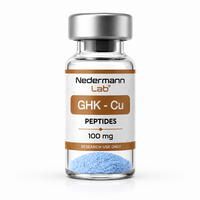
GHK-Cu is supplied as a lyophilized peptide powder in laboratory-grade borosilicate glass vials designed for research applications.
To preserve product integrity throughout storage, researchers should follow the storage recommendations provided on the product label and handle the material according to established laboratory practices.
Before Reconstitution
• Store the vial in its original packaging.
• Keep in a cool, dry place away from direct sunlight and moisture.
• Avoid repeated freeze-thaw cycles and exposure to excessive temperatures.
• Handle under appropriate laboratory conditions.
After Reconstitution
• Store the reconstituted solution at 2–8°C (36–46°F).
• Recommended storage period: up to 28 days.
• Do not refreeze the reconstituted solution.
The stability of the prepared solution may vary depending on the solvent used, handling procedures, and laboratory storage conditions. Reconstitution should always be performed according to validated laboratory protocols and Good Laboratory Practice (GLP) guidelines.
Product Appearance
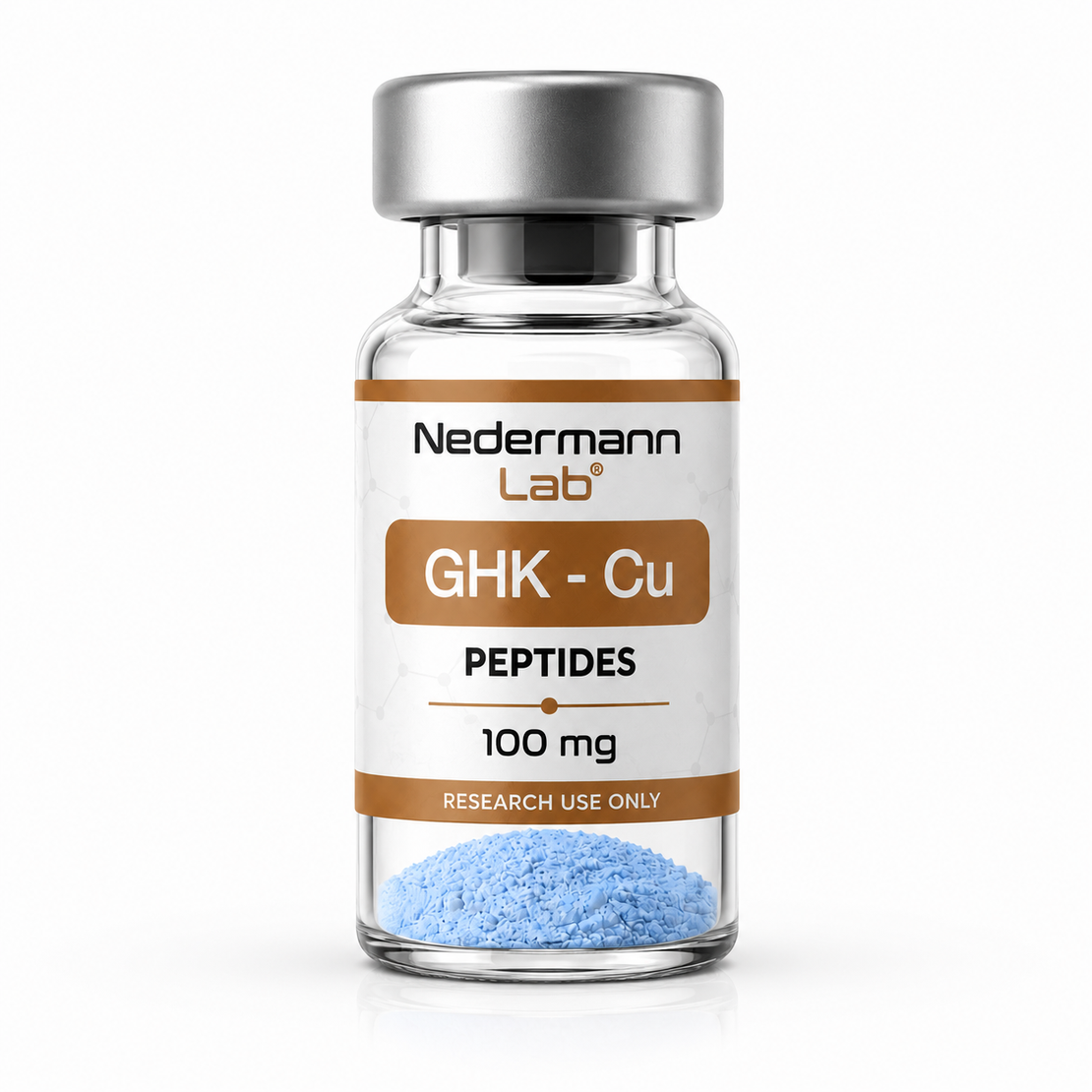
GHK-Cu is supplied as a blue to blue-violet lyophilized powder, a characteristic appearance resulting from its copper-binding structure.
After reconstitution, the solution typically appears clear with a light blue coloration. This natural color is a defining characteristic of GHK-Cu and should not be considered a manufacturing defect. Minor variations in shade may occur between production batches due to the inherent properties of copper-peptide complexes.
Frequently Asked Questions (FAQ)
What is GHK-Cu?
GHK-Cu (Copper Tripeptide-1) is a naturally occurring copper-binding peptide developed for scientific research. In the scientific literature, it is widely used as a research material in studies involving skin biology, collagen production, tissue repair, wound healing, connective tissue organization, and healthy aging.
Why has GHK-Cu attracted significant scientific interest?
Scientific interest in GHK-Cu is supported by decades of published research investigating its biological mechanisms and its role in tissue biology. It is recognized as one of the most extensively investigated copper peptides in studies related to skin health, collagen research, regenerative biology, and healthy aging.
What does "Research Use Only" mean?
Products labeled Research Use Only (RUO) are intended exclusively for laboratory research and analytical applications.
They are not approved for human or veterinary use and are not intended for the diagnosis, treatment, cure, or prevention of any disease.
How is product quality verified?
Every production batch undergoes documented quality control procedures, including analytical verification of product identity and purity. Batch-specific documentation is available through the accompanying Certificate of Analysis (COA).
Why is purity verified using HPLC?
High Performance Liquid Chromatography (HPLC) is one of the most widely accepted analytical techniques for verifying peptide identity and purity.
HPLC analysis helps confirm the analytical purity of each batch while ensuring manufacturing consistency and quality control throughout production.
Why is the Certificate of Analysis (COA) important?
The Certificate of Analysis (COA) is an official quality document accompanying each production batch.
It provides essential analytical information, including product identification, test results, and confirmation that the batch meets predefined technical specifications. The COA also supports traceability, quality assurance, and research documentation.
Disclaimer
All products supplied by Nedermann Lab are intended exclusively for Research Use Only (RUO).
These products are not medicines, dietary supplements, medical devices, cosmetics, or products intended for human or veterinary use.
The information presented on this website is provided for informational and scientific reference purposes only and is based on publicly available scientific literature. References to published studies and scientific publications are intended to describe areas of ongoing research and should not be interpreted as claims regarding the safety, efficacy, or clinical application of any product.
Nedermann Lab does not promote, recommend, or authorize the use of its products for any purpose other than legitimate laboratory research.
By purchasing products from Nedermann Lab, customers acknowledge that they are qualified to handle research materials, will comply with all applicable laws and regulations, and will use these products solely for their intended research purposes.
| Model: | ghk-cu-copper-tripeptide-1 |